Please enable JS

Design + Research Philosophy


    CREATIVE RESEARCH STATEMENT

    My creative practice is rooted in a passion for working across media—traditional, digital, and hybrid forms—to generate compelling and culturally responsive visual communication. Whether designing for print, screen, or spatial environments, I approach each project through the lens of holistic composition. Line, shape, color, and texture are not isolated components but interdependent systems. Much like the balance required in community and design education, visual harmony arises when these elements work in concert to produce clarity, dynamism, and impact. This interdisciplinary approach informs my teaching, where I emphasize the integration of formal principles, cultural context, and emerging technologies to create design solutions with purpose and longevity for diverse audiences and communities.

    My current creative research investigates public awareness of genetically modified organisms through the integration of typography, photography, and spatial design. By merging structured and expressive typographic forms with visual references to gene splicing and mutation, I create work that evokes the fluid and unstable identities of modified organisms. These compositions function as visual prompts—inviting viewers to question the cultural, ethical, and ecological implications of biotechnology and the changing landscape of the food system. My intention is not only to i nform but to cultivate critical reflection and dialogue around topics that are easily overlooked yet deeply consequential.

    Underlying my creative work is a strong sense of responsibility to my environment and community. I believe design is a relational practice—shaped by context, dialogue, and impact. This ethos informs both my studio work and my teaching. As an artist and educator, I aim to foster curiosity, agency, and visual literacy in others. I encourage students to engage with design as a platform for cultural insight, social awareness, and interdisciplinary collaboration. Through thoughtful expression, research-driven practice, and meaningful engagement, I strive to make a positive contribution to the individuals and communities I serve.
  • FORM BINARY
    Feeling of statement (A) and counterstatement (B)
  • HARMONY
    Simultaneous combinations of sound

    MUSICAL STRUCTURE

    SIGN THEORY/ MUSICAL ELEMENTS

    I am interested in the way people perceive and process information, and how their ability to learn may be improved by using visuals, and sound to translate complex, abstract information into concrete, experiential forms. Music is the expression of the past, and the present, and helps define the course of time. My work explores this abstract and mystery communication device, by developing visuals that assist in understanding the complex musical elements:

    • Pitch
    • Dynamics
    • Tempo
    • Rhythm
    • Texture
    • Form
    • Timbre
    • Harmony
    I have worked to translate the elements into a sign theory application and provide music educators with a highly useful visual presentation tool to improve current teaching methods. The developed pedagogy is currently in use at Eastman School of Music. The publication is introduced during the beginning stages of musical curriculums. It is my intention that it will also serve as a valuable model for other kinds of visual communication problems.

    EIGHT MUSICAL ELEMENTS

    DEFINITE PITCH
    Pitch is defined as highness or lowness of sound and is determined by the frequency of vibrations. The faster the vibrations the higher the sound, the slower the vibrations the lower the sound. Definite pitch, or tone, has regular vibrations and reaches the ear at equal intervals.
    INDEFINITE PITCH
    Pitch is determined by the frequency of regular vibrations and then given a particular value and corresponding note name, expressed as Hertz value (Hz). Indefinite pitch has irregular vibrations and may include sounds like squeaking brakes or clashing cymbals.
    DYNAMICS
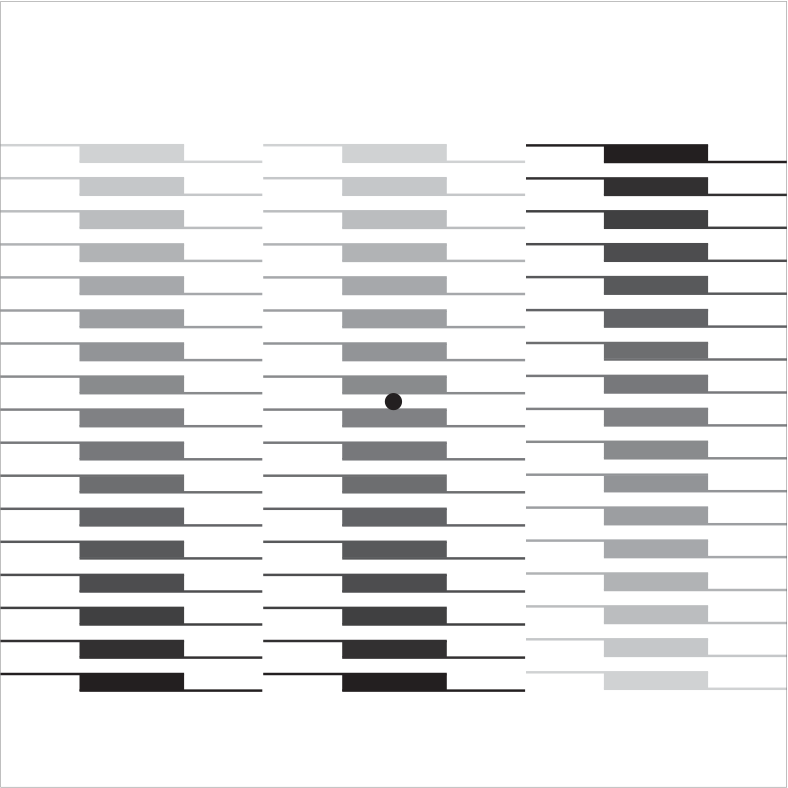
    Dynamics are defined as the intensity of volume with which notes and sounds are expressed. Dynamics are indicated in the music by the composer to indicate a certain degree of loudness or softness.

    1. pianississimo
    2. pianissmo
    3. piano
    4. mezzopiano
    5. mezzo forte
    6. forte
    7. fortissimo
    8. fortississimo
    TEMPO
    Tempo is the musical speed or pacing of a musical composition. It may be indicated by a metronome designation that links a particular durational unit with a particular duration in clocktime or by a description of speed and gestural character.

    1. Largo
    2. Adagio
    3. Andante
    4. Moderato
    5. Allegro
    6. Vivace
    7. Presto
    RHYTHM BEAT
    The beat found within music is the regular recurring pattern which can be divided into equal units of time. Beats are basic units of time by which all notes are measured.

    1. Regular
    2. Accented
    3. Variation
    RHYTHM STRUCTURE
    Rhythm is a combination of different note lengths in a piece of music or a regulated succession of strong and weak elements. Rhythm is an important parameter of musical structure, the other is pitch.
    TEXTURE HOMOPHONIC
    Homophonic texture is a single melodic line accompanied by chords. Attention is primarily focused on the melody. All parts are rhythmically dependent upon one another or there is a clear distinction between the melodic part and the accompaniment parts.
    TEXTURE MONOPHONIC
    Monophonic texture utilizes a single melodic line without accompaniment (this may include one or more people singing or playing an instrument in unison).
    TEXTURE POLYPHONIC
    Polyphonic texture consists of a simultaneous performance of two or more melodic lines with equal importance. Polyphonic writing often includes imitations when a melodic idea is presented by an instrument or voice and then restated immediately after by another voice or instrument.
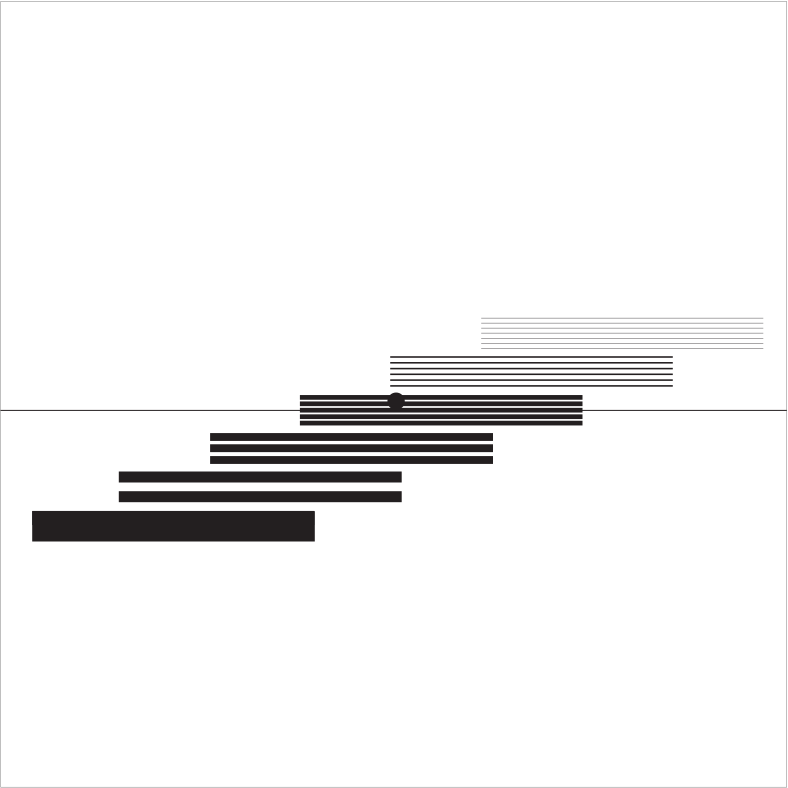
    FORM BINARY
    Binary form gives a feeling of statement (A) and counter statement (B). A composition in AB form may be represented AABB, AAB, or ABB if either or both of its large sections are repeated. Differences between A and B sections can be of any kind and the two sections can be equal or unequal in length.
    FORM TERNNARY
    Ternnary form represented as a idea (A) contrast or departure (B), return of original idea (A). Contrast between A and B sections can be of any kind, sections can be of equal or unequal length and the return of the material with the A section the second time can be a smooth transition or an abrupt change.
    TIMBRE
    Timbre is identified as the characteristic color or sound of an instrument or voice. Changes in tone color create variety and contrast. When the same melody is presented in successive order by two different instruments the music takes on an expressive effect, or by contrasting a new melody and presenting it in a new instrument, this maybe used to highlight a new idea.
    HARMONY
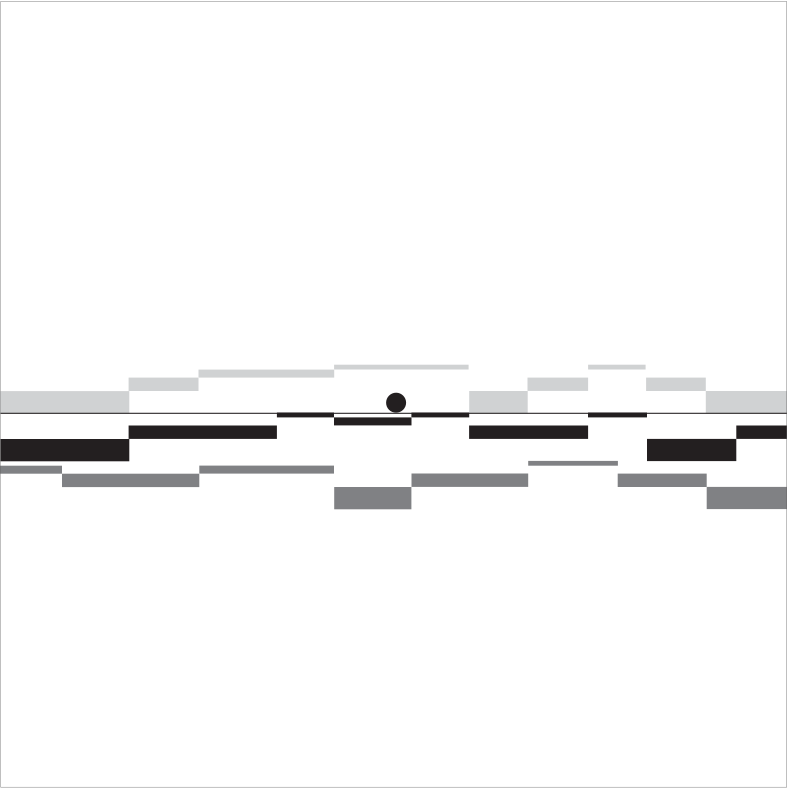
    Harmony is defined as an aspect of music that pertains to simultaneous combinations of sound. The word 'harmony' has been used to describe the position of higher and lower notes in relation to one another, both in the placement of its vertical and horizontal design.
RESEARCH CONTINUED

Typography / DIGITAL ART

AWARD: INDIGO GOLD + SILVER

DATE: Hong Kong 10 October, 2018

CATEGORY: DESIGN, TYPE, DIGITAL ART

ONLINE: www.indigoaward.com
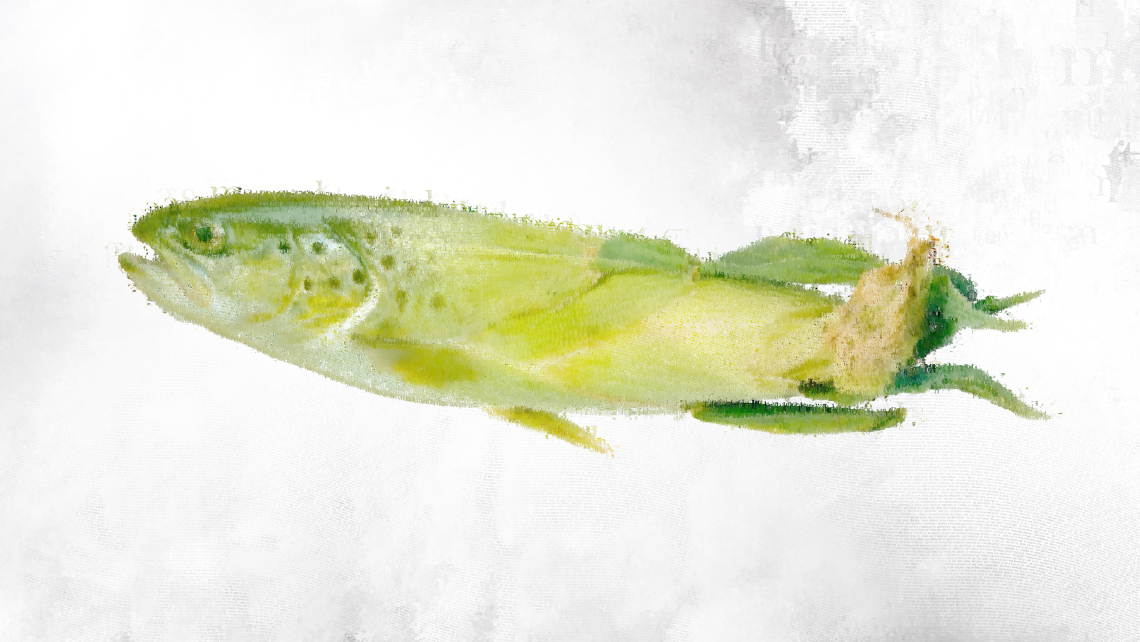
GENETICALLY ENGINEERED FOODS

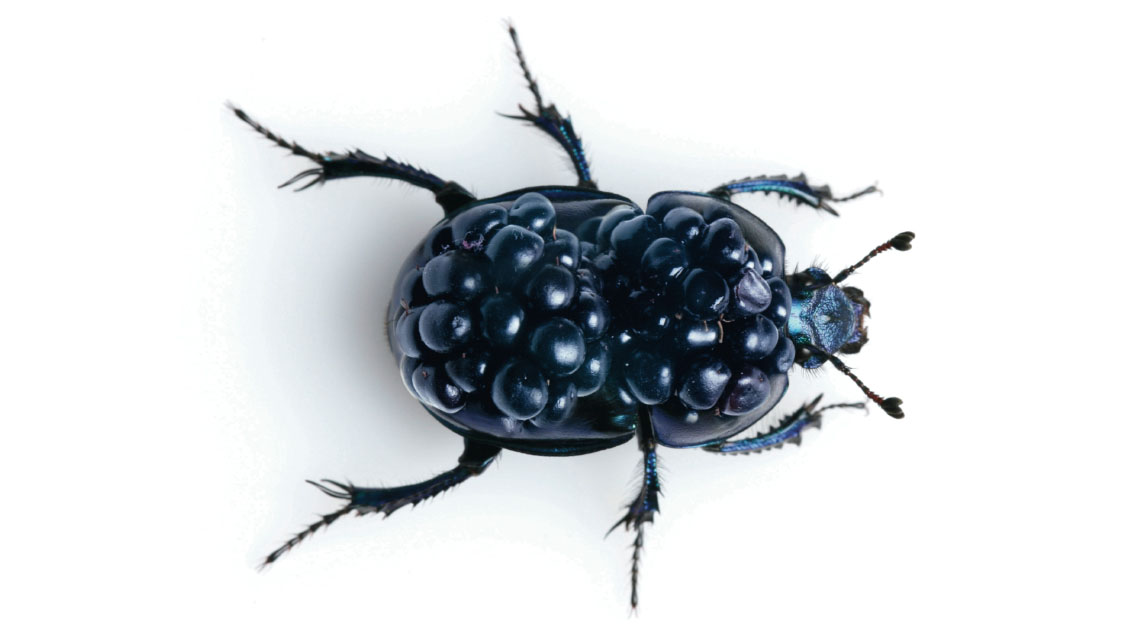
Genetically engineered (GE) foods have had their DNA changed/ GENES CHANGED

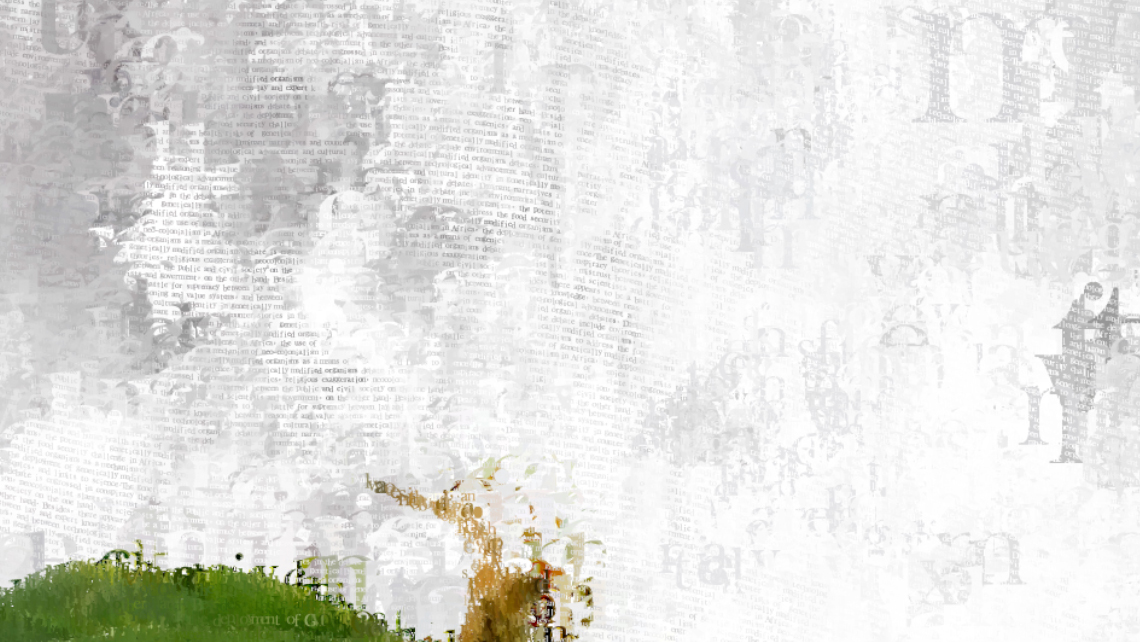
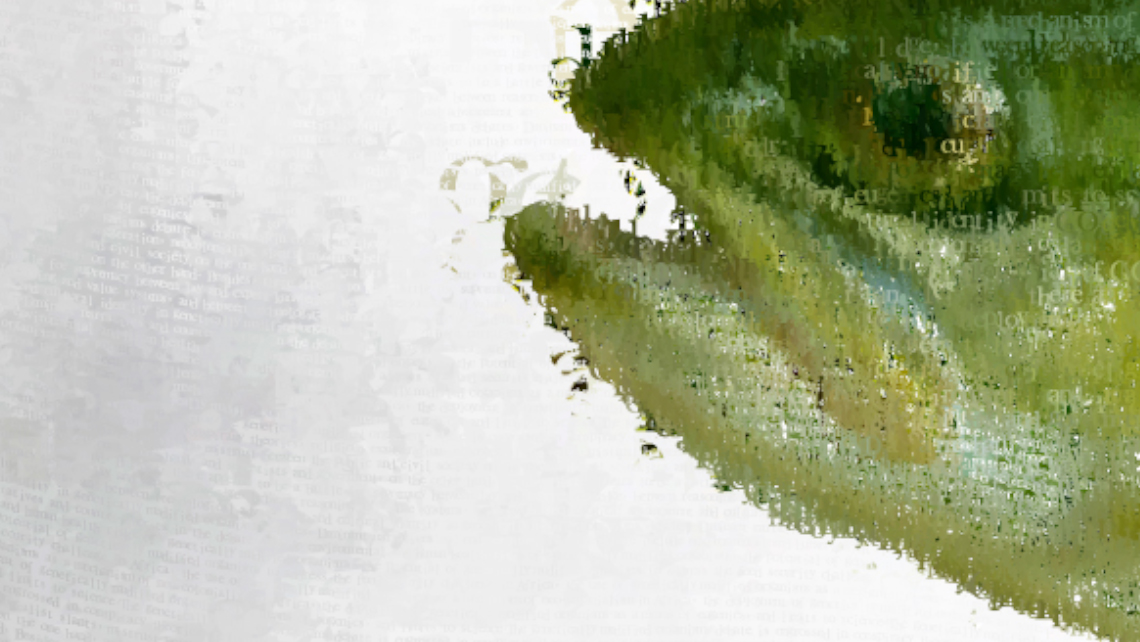
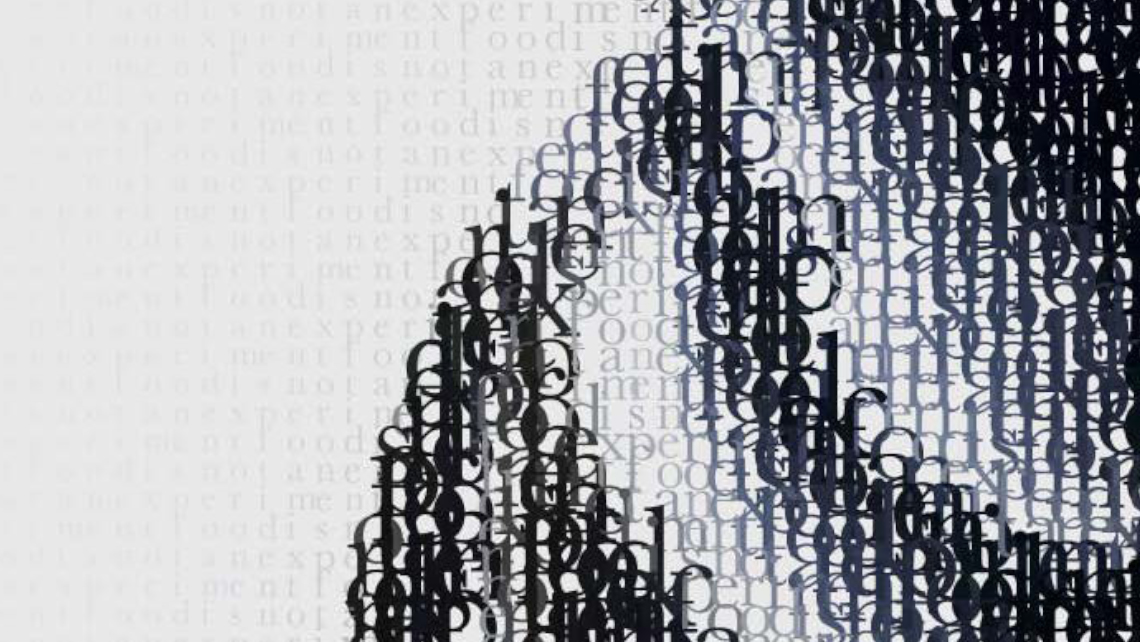
My ongoing body of work explores the cultural and ecological implications of plant genetic modification. The installation Genetically Premature Rhetoric serves as a catalyst for dialogue, inviting viewers to question the language, science, and assumptions surrounding engineered ecology. This piece marks the beginning of a growing series that continues to investigate how rhetoric and biotechnology intersect in public consciousness.

My research critically examines the narratives of food science and genetically modified organisms, raising questions about biological safety, transparency, and long-term impact. I use visual communication as a tool for public engagement, aiming to create work that informs, challenges, and activates reflection.

In these projects, I combine both freeform and structured typographic systems with layered imagery referencing gene splicing. This visual approach produces momentary impressions of instability and transformation—echoing the evolving identity of genetically modified organisms. The work encourages viewers to consider the future of our food systems and the cultural shifts that may accompany irreversible change.

National Human Genome Research Institute

The pigments that drew Martin’s interest are anthocyanins, which give blueberries, blackberries and eggplants their rich blue-purple hues. With funding from a German consortium, she set out to engineer tomatoes high in anthocyanins, aiming to increase the fruits’ antioxidant capacity

RESEARCH CONTINUED

We Are Programmed to Respond to Eyes

Overlooking the Obvious/ GENES CHANGED

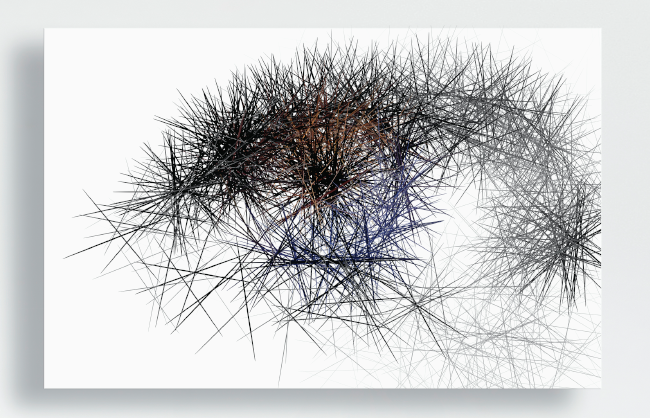
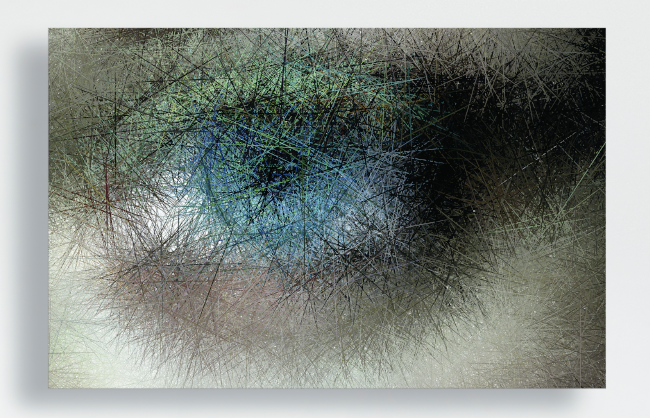
The social function of the gaze extends far beyond humans. In most social species, eye contact serves as a powerful signal of intent, conveying unspoken messages of threat, dominance, submission, courtship, and more—whether through direct gaze, gaze aversion, or shifts in eye color. Evolution has even equipped many moths, butterflies, and fish with eyelike markings, known as “eyespots,” designed to mislead or intimidate predators.

Eye contact—often termed “mutual gaze” in the study of nonverbal communication—can be unsettling because it signals that the individual looking at us intends to initiate some form of interaction. That intention may be exciting and welcome or frightening and intrusive, but in either case, another’s gaze prompts us to respond.
img

RETINA SENSES LIGHT + CREATES IMPULSES

LIGHT/IMPULSES
img

NOURISHMENT TO EYE

OPTIC/NERVE
img

SOCIAL SIGNAL

LIGHT/IMPULSES

<
VIEW MORE PROJECTS